Hydroponics thrives on clean, mineral-balanced water. A reliable reverse osmosis (RO) filtration system helps remove impurities while preserving essential minerals when needed. This guide highlights top RO solutions designed to deliver consistent, high-quality water for hydroponic setups, with emphasis on ease of use, filtration stages, and daily output. Below is a quick overview of five strong options, followed by detailed product profiles and a buying guide to help you compare features like GPD, filtration stages, and installation needs.
| Product | Brand | Daily Output (GPD) | Main Benefit |
|---|---|---|---|
| Aquatic Life 5-Stage RO | Aquatic Life | 200 | High capacity for larger hydroponic systems |
| Aquatic Life Twist-In 4-Stage | Aquatic Life | 75 | Compact, reliable filtration with RO/DI |
| Aquatic Life 3-Stage RO Buddie | Aquatic Life | 75 | 3-stage for smaller to medium setups |
| Max Water 3-Stage Portable | Max Water | 50 | Portable and easy to install |
| HydroLogic Stealth RO150 | HydroLogic | 150 | Advanced filtration with automatic features |
All featured units are suitable for hydroponic applications, balancing water purity with practical installation options. The following sections dive into each product’s specifics to help you decide which RO system best aligns with your grow space and water quality goals.
Aquatic Life 5-Stage Hydroponic RO System

The Aquatic Life 5-Stage RO system delivers up to 200 GPD of purified water, optimized for hydroponics where larger volumes flow through the system. It reduces unwanted matter including chlorine, chloramines, heavy metals, and total dissolved solids. The included multi-stage filtration ensures sediment reduction and carbon-based contaminant removal, supporting robust plant growth with consistently clean water. Ideal for larger gardens or where high-output pumping is required, this system emphasizes efficient filtration while maintaining membrane performance.
Aquatic Life Twist-In 4-Stage RO/DI
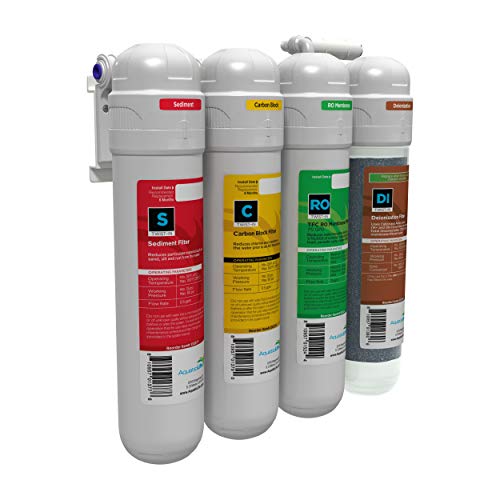
This twist-in 4-stage RO/DI unit provides reliable filtration with a 75 GPD output. It emphasizes high-quality membrane filtration to substantially reduce Total Dissolved Solids, complemented by a sediment filter that helps maintain clear water by trapping sand and silt. The twist-in design supports straightforward cartridge changes, making maintenance manageable for growers who want a steady flow of purified water without frequent service interruptions.
Aquatic Life RO Buddie 3-Stage (75 GPD)

The Aquatic Life RO Buddie 3-Stage system focuses on convenience for hydroponics with up to 75 GPD. It removes up to 98% of TDS, supporting precise control over water quality for nutrient uptake. The RO membrane works to lower dissolved solids, improving overall water clarity and consistency for hydroponic reservoirs or nutrient integrators. This compact option is suitable for mid-sized grow spaces or dedicated nutrient mixing stations where space is at a premium.
Max Water 3-Stage Portable RO System

The Max Water portable RO system provides up to 50 GPD, with a quick-connect design that simplifies setup—no professional plumbing required. It removes chlorine, nitrates, arsenic, and heavy metals, offering water suitable for hydroponic growth and safe drinking water. A 3-stage filtration sequence includes sediment, carbon, and RO membranes, balancing ease of use with effective contaminant reduction for smaller gardens, classrooms, or portable grow setups.
HydroLogic Stealth RO150

The HydroLogic 150 GPD Stealth RO150 combines high output with a compact footprint, featuring a 3-stage filtration setup plus a membrane power flush kit and automatic shut-off. This unit provides solid contaminant removal (remove 98%+ of many contaminants) and includes a pressure gauge for monitoring. It supports flexible waste-to-product water ratios and is suitable for larger hydroponic systems or settings that demand steady water production with minimal maintenance.
Buying Guide
Key purchase considerations for hydroponics and RO systems:
- GPD (gallons per day): Match output to your daily water needs. Larger systems benefit from higher GPD, while smaller setups can use compact units. Consider future expansion as your garden grows.
- Filtration stages: More stages (sediment, carbon, RO membrane, DI) generally yield cleaner water and longer membrane life. For hydroponics, focus on nutrient stability and predictable TDS control.
- Membrane quality and replacement costs: High-rejection membranes reduce dissolved solids but require proper maintenance and occasional replacement. Budget for ongoing cartridge changes.
- Ease of installation and maintenance: Portable systems offer quick setup, while undersink or modular units may require plumbing. Look for clear manuals and replacement part availability.
- Waste water management: Some systems offer 1:1 or 2:1 waste-to-product ratios. In water-conscious environments, select a unit with optimal waste efficiency.
- System footprint: Consider space constraints in grow rooms or closets. Compact units with modular components can fit tight spaces.
- Water source compatibility: Ensure your feed water pressure and quality align with the unit’s design. Some systems require additional pre-treatment for very hard water.
- Reliability and support: Reputable brands offer better warranty coverage, spare parts, and customer support—helpful for hydroponics where downtime affects yields.
In choosing among the options above, consider your garden size, daily water usage, and whether you need DI stages for ultra-pure water or RO-only solutions for a balance of efficiency and cost. For larger hydroponic setups, the 200 GPD and 150–75 GPD options provide robust outputs with strong filtration. For compact spaces or portable gardens, the 50–75 GPD units offer practical performance with straightforward maintenance.